
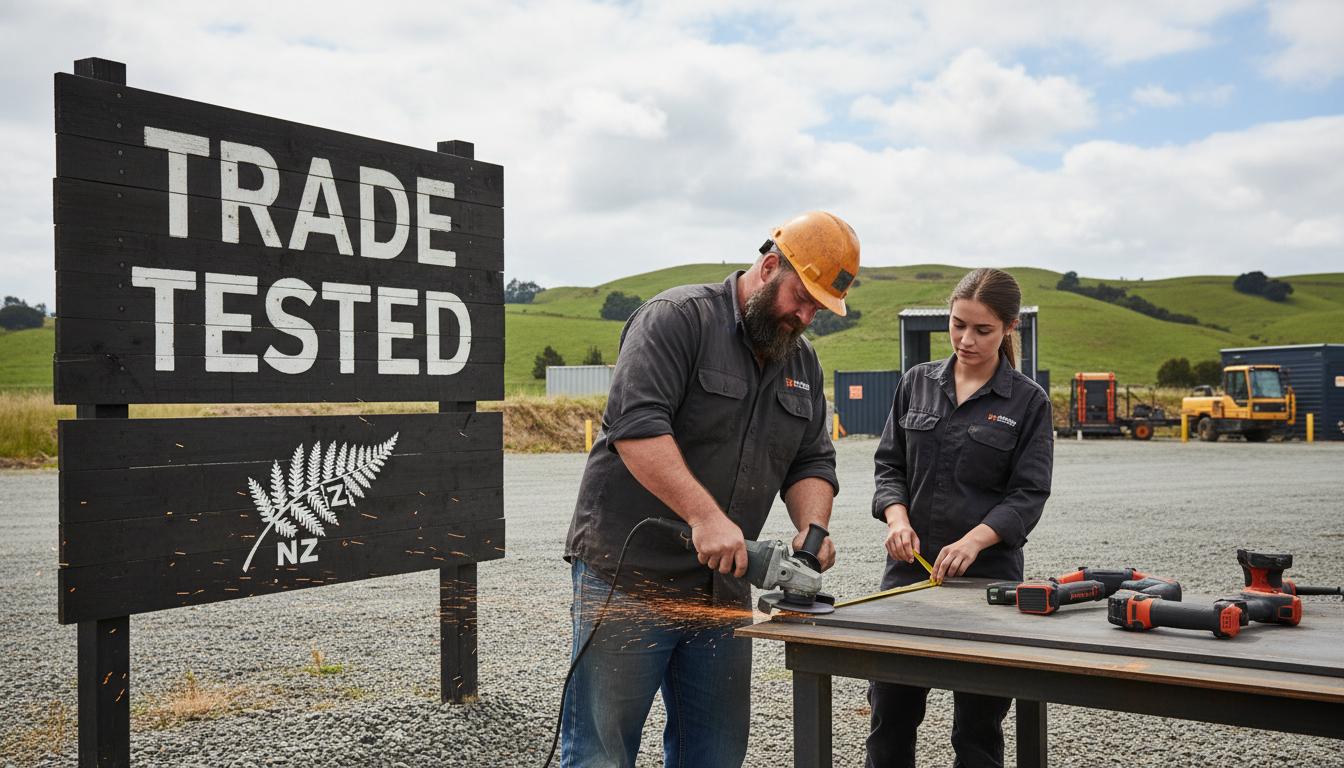
If you work in a New Zealand trade or are hiring tradespeople, you’ve likely seen the phrase trade tested nz. But what does it actually mean, who can get it, and how does it compare to apprenticeships and licences? This article explains trade tested nz in clear, practical terms and gives step-by-step guidance for workers and employers.
What is trade tested nz?
Trade tested nz is a practical skills assessment that shows a person can perform the tasks of a trade to an acceptable standard. It’s a way to prove on-the-job competence without a formal qualification like a modern apprenticeship.
Key points at a glance:
- It focuses on hands-on ability—doing the job safely and correctly.
- Assessment usually covers a set list of tasks, tools and safety practices.
- Employers and some regulators recognise trade tested status as evidence of capability.
How it works
The process for trade tested nz varies by industry and provider, but the core steps are similar across trades. The aim is to measure real-world performance, not just theory.
Typical components
- Practical test: complete specific tasks under observation.
- Evidence portfolio: photos, job records, and references.
- Technical or safety questions: short checks on critical knowledge.
- Assessment report: a written outcome that confirms pass or fail.
Who runs the assessments?
Assessments may be run by:
- Industry training organisations or private assessors.
- Employers using an approved assessor.
- Registered training organisations offering competency services.
Not all trade testing providers are the same. Always check the assessor’s credentials and whether the result is recognised by the specific employer or body you need it for.
Types / examples
Trade testing nz can apply across many trades. Here are common examples:
- Carpentry and joinery: framing, formwork, and finishing tasks.
- Plumbing and gasfitting: pipework, drainage, and pressure tests.
- Electrical work: wiring, fault finding, and safety checks (note: licensing may still be required).
- Heavy vehicle mechanics: diagnostic tasks, servicing and repairs.
- Sheetmetal and fabrication: measuring, cutting and welding tasks.
Some trades require a licence or registration in addition to being trade tested. For example, electrical work often requires an authorised person’s certificate beyond a trade test.
Pros and cons
Trade tested nz has advantages and limitations. Below is a balanced view to help you decide if it fits your situation.
Pros
- Fast way to prove skills for experienced workers without formal qualifications.
- Practical focus—assesses the ability to do the job now.
- Useful for employers hiring mature workers or migrants with overseas experience.
- Often cheaper and quicker than full qualification routes.
Cons
- Not always equivalent to a formal qualification or apprenticeship.
- Recognition can vary between employers and agencies.
- May not substitute for trades that legally require a licence or registration.
- Quality of assessment depends on the assessor’s standards.
How to use or choose trade tested nz
Whether you’re a tradesperson or an employer, follow clear steps to get good results from trade testing.
Step-by-step: Getting trade tested in NZ
- Decide why you need trade tested nz (employment, immigration evidence, career move).
- Check the specific skills and tasks the trade test covers for your trade.
- Find accredited or reputable assessors—ask industry groups or RTOs for recommendations.
- Prepare a portfolio of work: photos, job sheets and referees.
- Book and complete the practical assessment and any written checks.
- Receive the assessment report and check how employers or regulators accept it.
Choosing an assessor or provider
Use these criteria when you pick a provider for trade tested nz:
- Industry recognition: does the trade body or local employers accept their results?
- Assessor qualifications and experience in the trade.
- Clear test criteria and written evidence of what you will be assessed on.
- Transparent pricing and timeframes.
- Possibility to re-assess or appeal if needed.
Tips for preparing
- Practice the standard tasks under time conditions.
- Gather real job records and contacts who can confirm your work.
- Refresh safety rules and local codes that affect your trade.
- Ask for a sample assessment checklist so you know the expectations.
Comparison: Trade Tested NZ vs Apprenticeship vs Licensed Tradesperson
| Feature | trade tested nz | Apprenticeship | Licensed tradesperson |
|---|---|---|---|
| Main focus | Practical skills assessment | Structured training + qualification | Legal permission to carry out regulated work |
| Time to complete | Days to months (assessment-dependent) | Years (on-job + block courses) | Varies; licence requires meeting standards and sometimes experience |
| Recognition | Varies by employer and industry | Widely recognised nationally | Required for some jobs (e.g., electrical) |
| Best for | Experienced workers without paperwork | New entrants needing formal qualification | Work requiring legal compliance |
| Cost | Moderate | Often subsidised or paid as wages during training | Licence fees + possible course costs |
FAQ
1. Is trade tested nz the same as a qualification?
No. trade tested nz confirms practical competence, but it may not be a full qualification like a New Zealand Certificate. Some employers treat it the same; others prefer formal qualifications.
2. Can migrant workers use trade tested nz?
Yes. Experienced migrants often use trade testing to prove skills when they don’t have NZ qualifications. Check immigration or employer requirements first—some visas or licences need specific assessments.
3. How long does a trade test result last?
There’s no universal expiry. Some employers accept recent results only. Keep records and update your skills when standards or regulations change.
4. Will a trade test get me a licence?
Not automatically. Licensed trades usually require specific assessments or registration. Use trade tested nz as part of your evidence, but confirm licence rules for your trade.
5. How much does trade testing cost?
Costs vary by trade and provider. Expect moderate fees for assessor time and any paperwork. Ask providers for full pricing before booking.
6. What if I fail the test?
Most providers give feedback and a chance to re-assess after remediation. Use the assessor’s report to target weak areas and schedule a re-test.
Final checklist before you book
- Confirm the reason you need trade tested nz and who must accept it.
- Choose an assessor recognised by your industry or employer.
- Prepare a clear portfolio and practise key tasks.
- Ask about re-test policies and what the written report includes.
- Keep a digital copy of the assessment and referees’ contacts.
Trade tested nz is a practical, effective route for experienced workers to prove their skills quickly. When chosen and prepared correctly, it helps tradespeople get jobs, gain trust, and move forward in their careers. Use the steps and comparisons in this guide to make a confident choice and get the best result from your assessment.