
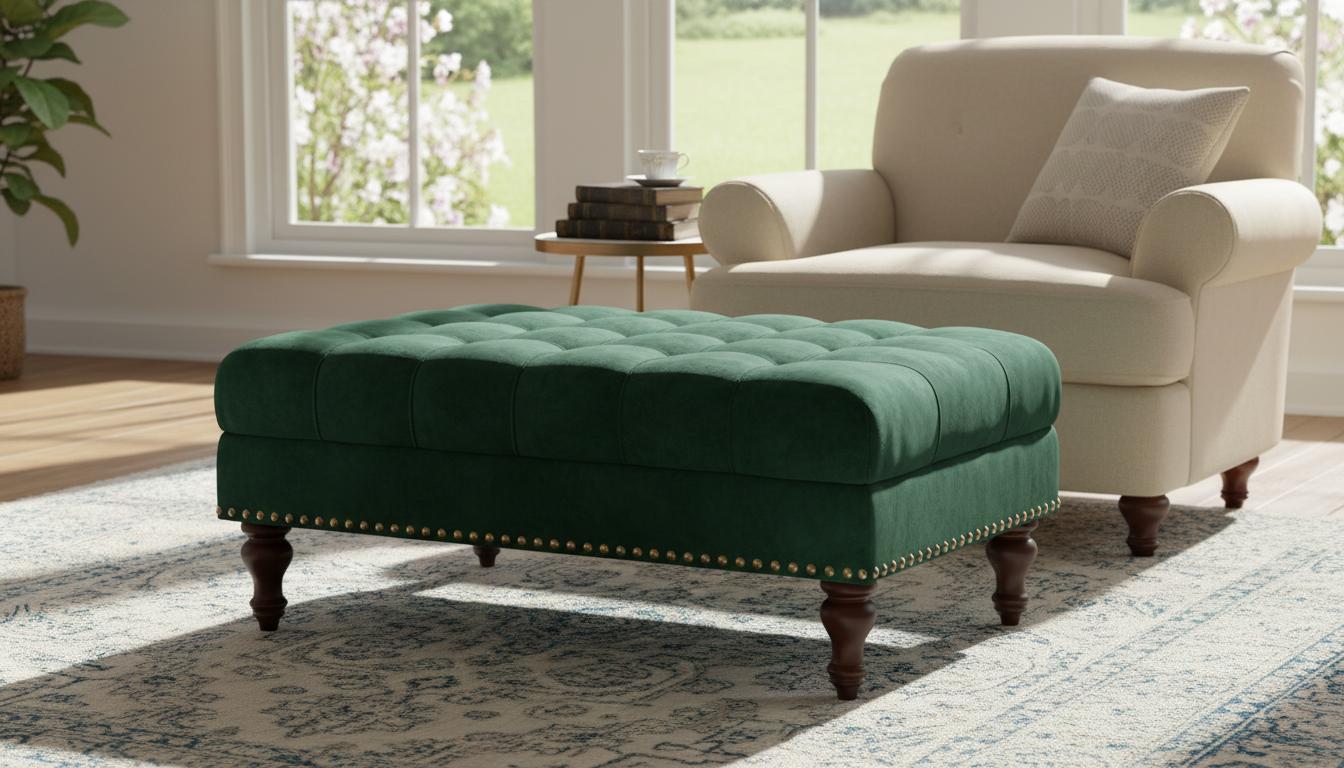
An ottoman can be a footrest, spare seat, coffee-table stand-in, or a tidy place to hide the mess before guests arrive. In Kiwi homes where space works hard—city apartments, family lounges, and coastal baches—this flexible piece often earns its keep. Below, you’ll learn what an ottoman is, how it works, the main types, pros and cons, and how to choose the right one for your space.
What is
An ottoman is a low, upholstered piece of furniture with no back or arms. It’s commonly used as a footrest, extra seating, or a soft-top coffee table. Many models include hidden storage under a lift-up lid. In New Zealand, the word is often used interchangeably with footstool or pouf, though a pouf is usually softer and rounder, and a footstool is smaller and firmer.
The name traces back to the Ottoman Empire via European interiors, but in today’s homes it’s simply the most adaptable seat in the room. Shapes range from compact rounds to long benches that sit at the end of a bed. Covers span durable fabrics, leather, wool blends, and outdoor-friendly textiles.
How it works
The ottoman’s job is to add comfort and utility without hogging space. Here’s how the key parts and features contribute:
- Frame: Typically hardwood or quality plywood for strength; lightweight MDF appears in budget pieces.
- Padding: Foam or foam-with-fibre wrap gives softness; high-density foam holds shape longer.
- Upholstery: Fabric for warmth and colour; leather for wipe-clean practicality; wool blends suit cooler climates; performance fabrics resist stains.
- Feet or glides: Fixed legs, discreet glides, or low casters for easy movement on rugs or timber floors.
- Storage mechanisms: Hinged lids, sometimes with soft-close or gas struts to prevent slamming.
For comfort, aim for an ottoman height that’s roughly level with, or up to 2–4 cm lower than, your sofa’s seat. That lets your legs rest naturally. As a coffee table alternative, a firm, flat-topped ottoman works best; add a tray to steady drinks and remotes.
Modular options pair with sectionals and chaise sofas, letting you shift from “L” to “U” layouts on the fly. Outdoor versions use quick-dry foam and UV-stable fabrics to handle New Zealand’s strong sun and coastal conditions.
Types / examples
Storage ottoman
A lift-up lid hides throws, toys, and gaming gear. Great for small lounges and rentals where every cubic centimetre counts.
Pouf
Light, cushy, and often round or knitted. Easy to drag into a reading nook or layer in a kid’s room.
Cocktail ottoman
Large square or rectangular piece that anchors a living room. Firm top suits trays, books, and board games.
Bench ottoman
Long, narrow design for hallways or at the end of the bed. Adds a seat for tying shoes or staging tomorrow’s outfit.
Modular or chaise ottoman
Sized to extend a sofa so you can put your feet up. Doubles as a movable seat when guests drop in.
Sleeper ottoman
Less common but handy in studios or baches: a fold-out single mattress lives inside the ottoman.
Outdoor ottoman
Resin wicker, powder-coated frames, and marine-grade or solution-dyed fabrics resist fading and mildew. Ideal on decks and under pergolas.
| Type | Typical size footprint | Best for | Pros | Cons | Care notes |
|---|---|---|---|---|---|
| Storage ottoman | 80–120 cm wide | Small lounges, toys, throws | Declutters fast; multi-use | Heavier to move | Check hinges; avoid overloading |
| Pouf | 45–60 cm diameter | Casual seating, footrest | Lightweight; playful | Less table-like; can sag | Regular fluffing or refill |
| Cocktail ottoman | 80–110 cm square/rectangular | Coffee table alternative | Anchors room; tray-friendly | Needs space to circulate | Rotate to even wear |
| Bench ottoman | 100–160 cm long | Bed ends, hallways | Narrow; versatile seat | Less comfy for feet | Protect corners from scuffs |
| Modular/chaise ottoman | Matches sofa depth | Extending sofas | Flexible layouts | Looks odd away from sofa | Match fabric and height |
| Sleeper ottoman | Similar to bench | Overnight guests | Hidden bed | Firm seat; heavier | Airing mattress helps freshness |
| Outdoor ottoman | Varies | Decks, patios, baches | Weather-resistant | Needs winter storage | Rinse salt; cover off-season |
Pros and cons
- Pros:
- Multi-purpose: footrest, seat, table, storage.
- Kid-friendly soft edges; fewer bruises than a hard coffee table.
- Easy to move to suit gatherings, movie nights, or game days.
- Warms up a room with texture, pattern, or leather.
- Can visually soften straight-lined NZ new-build interiors.
- Cons:
- Not as stable as a hard table for hot drinks without a tray.
- Soft tops can sag if overused as a seat.
- Light fabrics stain; leather can scratch with pets.
- Bulky storage lids need room to open.
- Wheels may track on deep-pile rugs.
How to use or choose
Step-by-step: choose the right ottoman
- Measure your space. Leave 30–45 cm between the ottoman and sofa so legs can swing past.
- Decide its main job: footrest, table, storage, seating, or a mix.
- Pick a shape that suits traffic flow: round for tight rooms; rectangular to mirror a sofa; narrow bench for bed ends.
- Match the height. Aim for level with your sofa seat or up to 2–4 cm lower.
- Choose upholstery. For busy homes, use performance fabric or textured weaves that disguise marks; leather wipes clean but shows scratches. Wool blends suit cooler regions.
- Assess storage needs. If you’ll stash blankets, pick a sturdy hinge and breathable lining.
- Check build quality: solid frame, dense foam, neat seams, strong stitching, and even tension.
- Test comfort in-store if possible: sit on edges, rest your feet, lift the lid.
- Plan delivery. Measure doorways, lifts, and stair turns; consider rural delivery timing in NZ.
- Style it. Add a tray for stability, then layer a book stack, a plant, or a bowl for remotes.
New Zealand-specific tips
- Sun exposure: NZ UV is fierce. To reduce fading, rotate the ottoman seasonally, use UV window films or sheers, and condition leather.
- Humidity and coastal air: choose mildew-resistant or breathable fabrics. Air out storage ottomans and avoid sealing damp throws inside.
- Small lounges and apartments: pick lift-top storage styles and round shapes to keep walkways clear.
- Baches and outdoor rooms: solution-dyed acrylic or olefin fabrics shrug off salt and sunscreen; removable covers help with washing.
- Rentals: light pieces with non-marking glides protect timber floors; a tray helps avoid ring stains.
- Sustainability: look for FSC-certified timber, replaceable cushion inserts, and durable fabrics. Reupholstering a quality second-hand ottoman can beat buying cheap twice.
Care and maintenance
- Vacuum weekly with a soft brush to lift dust from seams and tufting.
- Blot spills immediately; avoid rubbing. Use cleaner suited to the fabric type.
- Rotate the ottoman quarterly to even sun and wear.
- Leather: dust, then condition every 6–12 months; keep away from direct heat.
- Outdoor: rinse salt and dust; let cushions dry fully before covering.
FAQ
What size ottoman works with a standard sofa?
As a guide, choose an ottoman about two-thirds the width of your sofa. Leave 30–45 cm of clearance so people can pass without bumping knees.
How high should an ottoman be?
Level with your sofa seat or up to 2–4 cm lower is comfortable for feet and usable as extra seating.
Can an ottoman replace a coffee table?
Yes. Pick a firm, flat-top ottoman and use a tray for drinks and candles. It’s safer with kids and in tight spaces.
What’s the difference between an ottoman and a pouf?
A pouf is usually softer, rounder, and lighter—great as a casual footrest. An ottoman has a firmer structure and can double as a table or storage.
Are storage ottomans safe to sit on?
Quality models with solid frames and well-fitted hinges are fine for regular seating. Avoid standing on lids and check weight guidance from the manufacturer.
Which fabric is best for homes with pets?
Tight weaves, woven performance fabrics, or distressed leather hide scuffs. Avoid loose knits and high-pile bouclé that catch claws.
How do I stop an ottoman sliding on timber floors?
Add rubber furniture pads, a non-slip rug underlay, or choose models with grippy feet.
Where can I buy an ottoman in New Zealand?
Nationwide retailers like Freedom, Farmers, Briscoes, Nood, Città, and Harvey Norman carry a range, with budget options at Kmart and The Warehouse. For unique pieces, check local furniture makers, upholsterers, and Trade Me for second-hand finds.
How do I clean a fabric ottoman after a spill?
Blot with paper towels, apply a suitable fabric cleaner, and test in an inconspicuous area first. For stubborn stains, consult a professional upholstery cleaner.
Do gas-lift or soft-close hinges matter?
They help prevent the lid slamming and make access easier, particularly with kids around. Still, keep fingers clear and don’t overload the compartment.
Will an outdoor ottoman fade?
Quality, solution-dyed fabrics resist fading, but New Zealand’s UV is strong. Use covers when not in use and store cushions dry over winter.
Can I reupholster an ottoman?
Yes. If the frame is solid, a local upholsterer can replace foam and fabric, extend its life, and match it to your current sofa.
What colour works best?
Mid-tone neutrals are forgiving. If your sofa is plain, an ottoman is a good spot for pattern or texture—think leather, tweed, or a subtle check.